
Student teachers and high school trainee teachers participating in the project “EU goes School: Teachers as EU Ambassadors (EGS-LAB)” visited various EU institutions and extracurricular learning venues in Brussels during the week of January 11-15, 2026.
As part of the EU-funded project “EU goes School: Teachers as EU Ambassadors (EGS-LAB)”, student teachers and high school trainee teachers went on a five-day excursion to Brussels in January 2026. EGS-LAB supports (prospective) teachers in reflecting on and developing their attitudes, knowledge, and teaching skills in relation to Europe and the European Union (EU) in order to strengthen their own European identity and that of their students through high-quality teaching. The aim of the study trip was to get to know key institutions of the European Union, experience European education firsthand, and reflect on the didactic added value of extracurricular learning locations for teaching.
Day 1: Arrival, getting to know each other, and pre-evaluation
On Sunday, January 11, 2026, the group set off from Munich to Brussels by train. The substantive work began during the train journey: in a pre-evaluation, the participants reflected on their previous attitudes, expectations, and prior knowledge of the EU and European education work. After arriving in Brussels, they checked into their hotel before ending the day with a dinner together. The informal setting provided an opportunity to get to know each other and to have an initial exchange about individual connections to the EU and political education.
Day 2: City tour, Parlamentarium, and simulation game
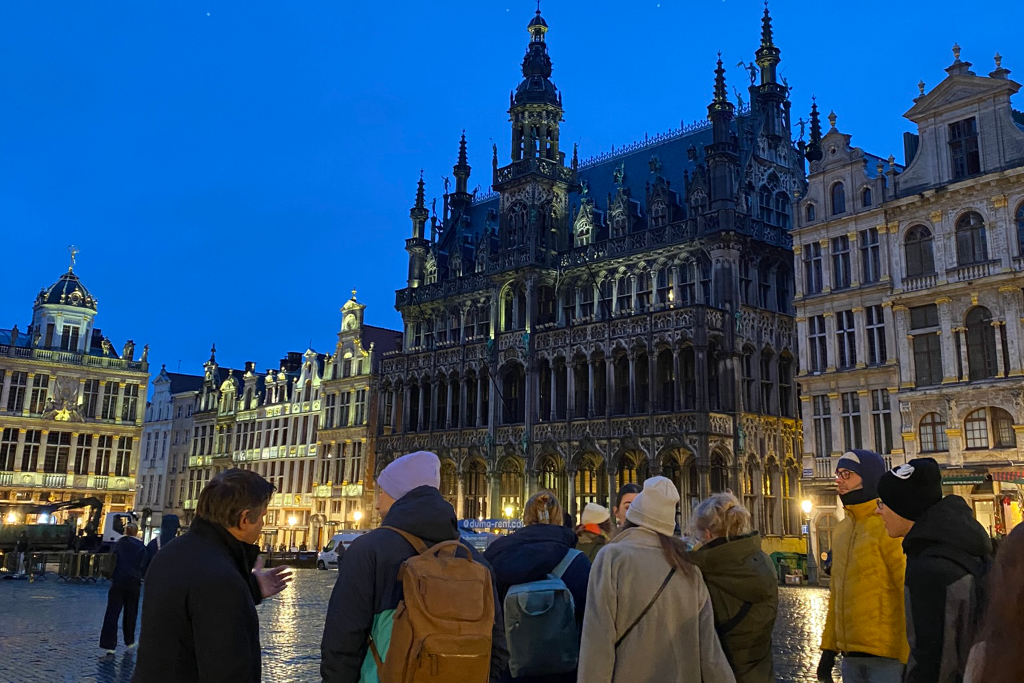
Monday began with a guided tour of Brussels, during which participants explored the historic old town and cultural diversity of the Belgian capital.
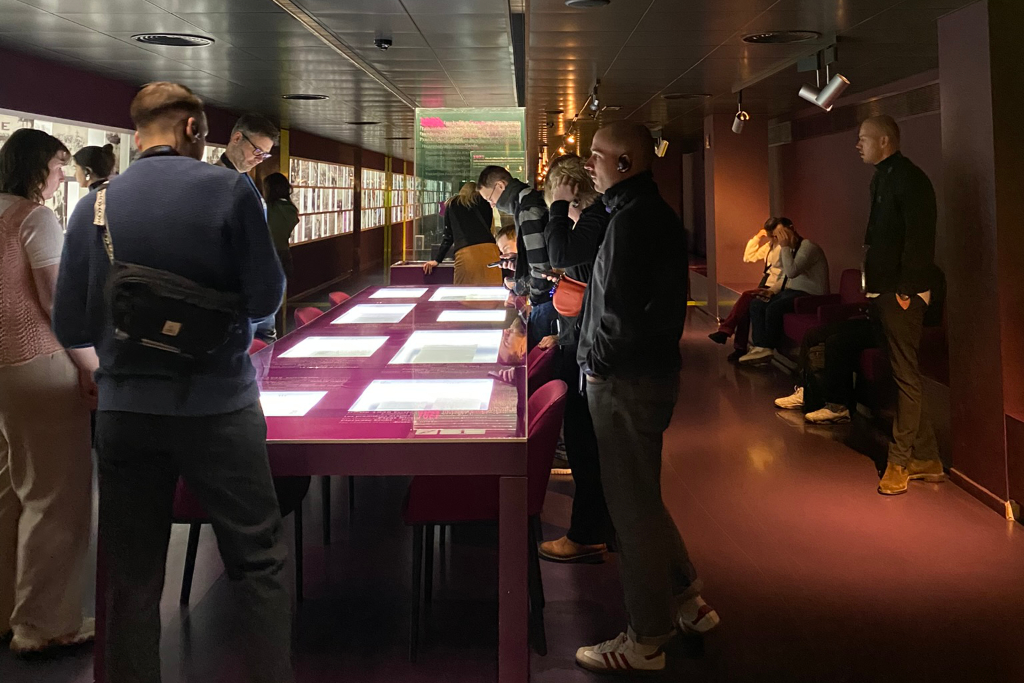
The group then visited the Parlamentarium, the European Parliament’s visitor center. With the help of audio guides, the students and trainee teachers explored the history of European cooperation and how the EP and its members work to tackle current challenges.
In the afternoon, participants took part in a simulation game that tied in with the content of the Parlamentarium. In the simulation of political decision-making processes, they were able to take on the perspectives of different political groups and countries and experience the complexity of European legislation in a practical way. Especially with regard to future teaching, it became clear what potential action-oriented methods have for understanding political processes.
Day 3: European Parliament, Bavarian Representation, and European Commission
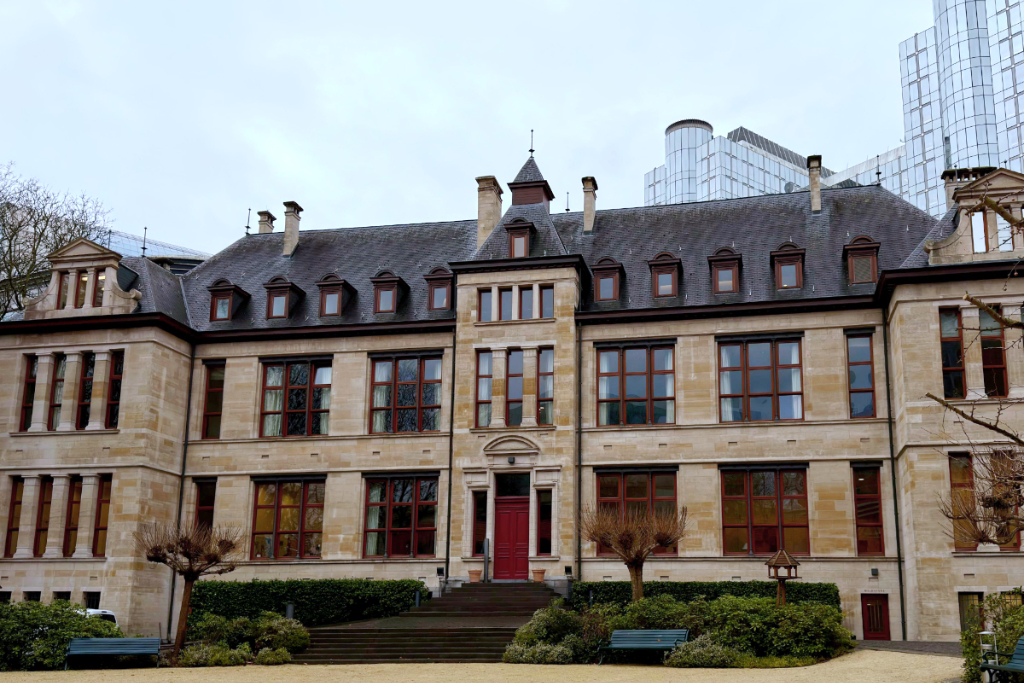
On Tuesday morning, the group continued their discussion of the issues at the EP. In an in-depth information session on how the Parliament works, they were able to build on their previous impressions, ask further questions, and examine individual topics in greater detail. This was followed by a tour of the plenary chamber, which provided additional insights into parliamentary practice.
Afterwards, the participants visited the Representation of the Free State of Bavaria to the European Union. In a discussion with Philipp Aigner, who himself used to work as a high school teacher in Bavaria, he provided concrete insights into his work at the interface between education policy and the European level. His personal career provided the (prospective) teachers with a particularly tangible link between school, education administration, and European politics.
The day ended with a visit to Stephanie Kunisch from the European Commission (EACEA), who is responsible for the EGS-LAB project on behalf of the Commission. Here, participants gained insights into European funding programs in the field of education and the importance of transnational projects for European teacher training.
Day 4: European teacher training and the European School Brussels III
On Wednesday, the program began with a visit to the Association for Teacher Education in Europe (ATEE). The ATEE aims to improve the quality of teacher education in Europe through active dialogue and international exchange of research and practice in teacher training and continuing education.
The participants then visited the Permanent Representation of the Federal Republic of Germany to the EU. There they met Imke Vonalt, who is seconded to Brussels from the Federal Ministry of the Interior. She provided insights into her current work in the field of justice and home affairs and answered the participants’ questions in detail.
In the afternoon, the group visited the European School Brussels III. Due to the large number of EU institutions in Brussels, there are a total of five European Schools in the city, which are attended in particular by the children of employees working for the EU institutions. At the European School Brussels III, the students and trainee teachers were introduced to the European school system and compared it with the German school system. A key feature is that lessons are taught in the students’ first language (L1) and that they graduate with the European Baccalaureate. In addition, the participants learned about various school projects that illustrate the holistic approach to education and values of the European Schools.
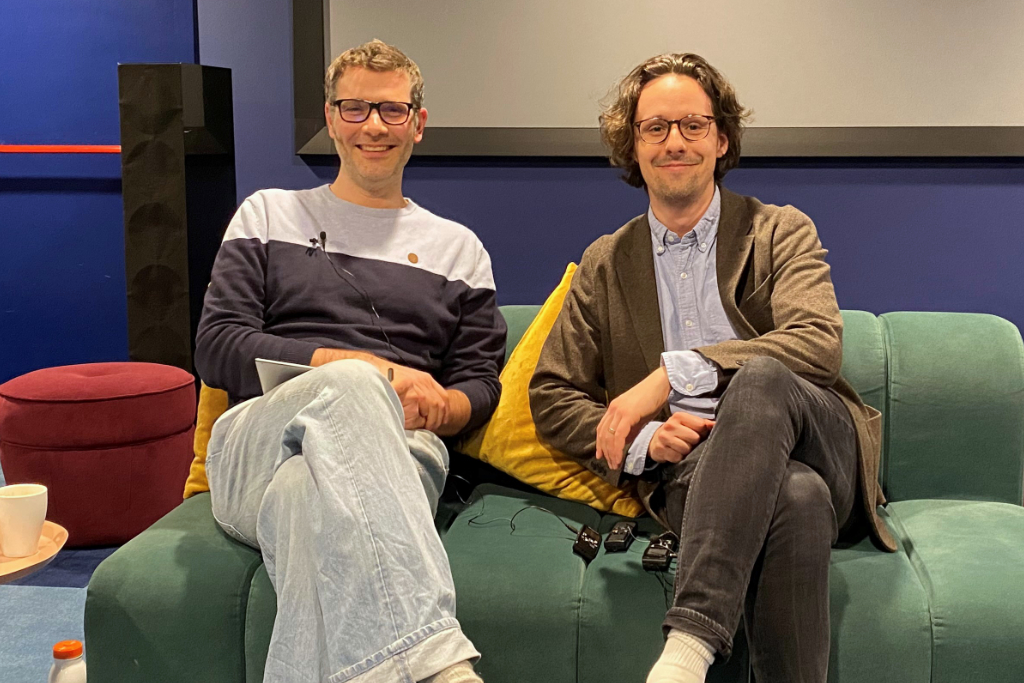
A special item on the agenda was the live recording of a podcast episode for the EGS-LAB podcast with seminar director Dr. Georg Martin. The conversation focused on his work in teacher training, supporting trainee teachers, and the importance of field trips for sustainable learning and a deeper understanding of political and European contexts. The recorded podcast episode will be available on the project website in February.
Day 5: House of European History and return journey
The last day of the excursion took the group to the House of European History. There, the participants took part in an information event specifically for teachers, where teaching materials were presented and their possible uses in a school context were discussed. This was followed by a guided tour of the permanent exhibition, which illuminates European history from a transnational perspective and encourages critical engagement with Europe’s past and present.
During the return trip to Munich, the excursion concluded with a post-evaluation in which participants reflected on their learning experiences. There was a clear increase in specialist knowledge, institutional understanding, and didactic confidence in dealing with European issues. The excursion to Brussels showed once again how important real encounters with European institutions and actors are for the development of political maturity—both for (prospective) teachers and their future students.
Further impressions of the excursion


